Hamilton’s Economic Story Is Far Bigger Than The CBD
Market Updates
Hamilton City Council has just released its Annual Economic Report. Judging by some of the coverage it generated, you’d be forgiven for thinking our city is in serious decline. We heard a lot about empty shops, struggling hospitality owners, and the 1,200 jobs lost in the CBD. I read the report too, and here is my take.
I don’t think what happened in our CBD last year reflects what happened across the entire city. And I certainly don’t think it suggests we’re a city in decline. Far from it. Is it tough right now? Yes, absolutely. Did retailers and restauranters have an exceptionally tough year? Undeniably. Does calling it a natural part of the economic cycle, or simply saying we need some perspective, recognise the pain many Hamiltonians have been feeling? No. The hurt is real. Working in real estate, I see it up close, often in families pushed into hardship and forced to sell.
But there is more to the story, and Hamilton’s economy extends well beyond a few city blocks. Right now, we’re reminded daily of this tough economic cycle at the pump, at the grocery store, and every time we open a bill. We understand why hospitality has been hit so hard; dining out is often one of the first things households cut when budgets tighten.That same pressure is being felt across New Zealand. Hamilton’s deeper economic story, however, is very different. There are structural reasons Hamilton is better placed than many other places to weather this cycle.
Hamilton remains New Zealand’s fastest-growing city. It has held that title for two straight years, and the growth shows no signs of waning. Last year, more businesses were started in Hamilton than closed. Our economic output also grew slightly, unlike many other parts of the country. Building consents were also up. These are all very encouraging signs.
I think we should talk about these things more, and not just because it makes us feel better about not being able to afford to take the family out for dinner right now. Economic transformation in Hamilton is unfolding, almost in stealth mode.
You see it when you skirt past Ruakura every six months and notice more shipping containers, more buildings, more busyness. You see it when you bike over the new bridge to Peacocke on a random Sunday and start wondering how to get dibs on the riverfront retirement village in the making. You see it when you take a detour down Knighton Road and spot the crane at work, building our soon-to-be medical school. You see it when you peek through the hoardings at Te Awa Lakes and catch a glimpse of future Hamilton unfolding. This is generational infrastructure being built and it may not deliver an economic sugar hit today, but it’s laying solid foundations for the very best kind of growth.The kind that creates high-skilled, high-value employment, so our economy is less exposed when retail and hospitality spending dips.The kind that creates neighbourhoods we won’t want to leave when we retire.
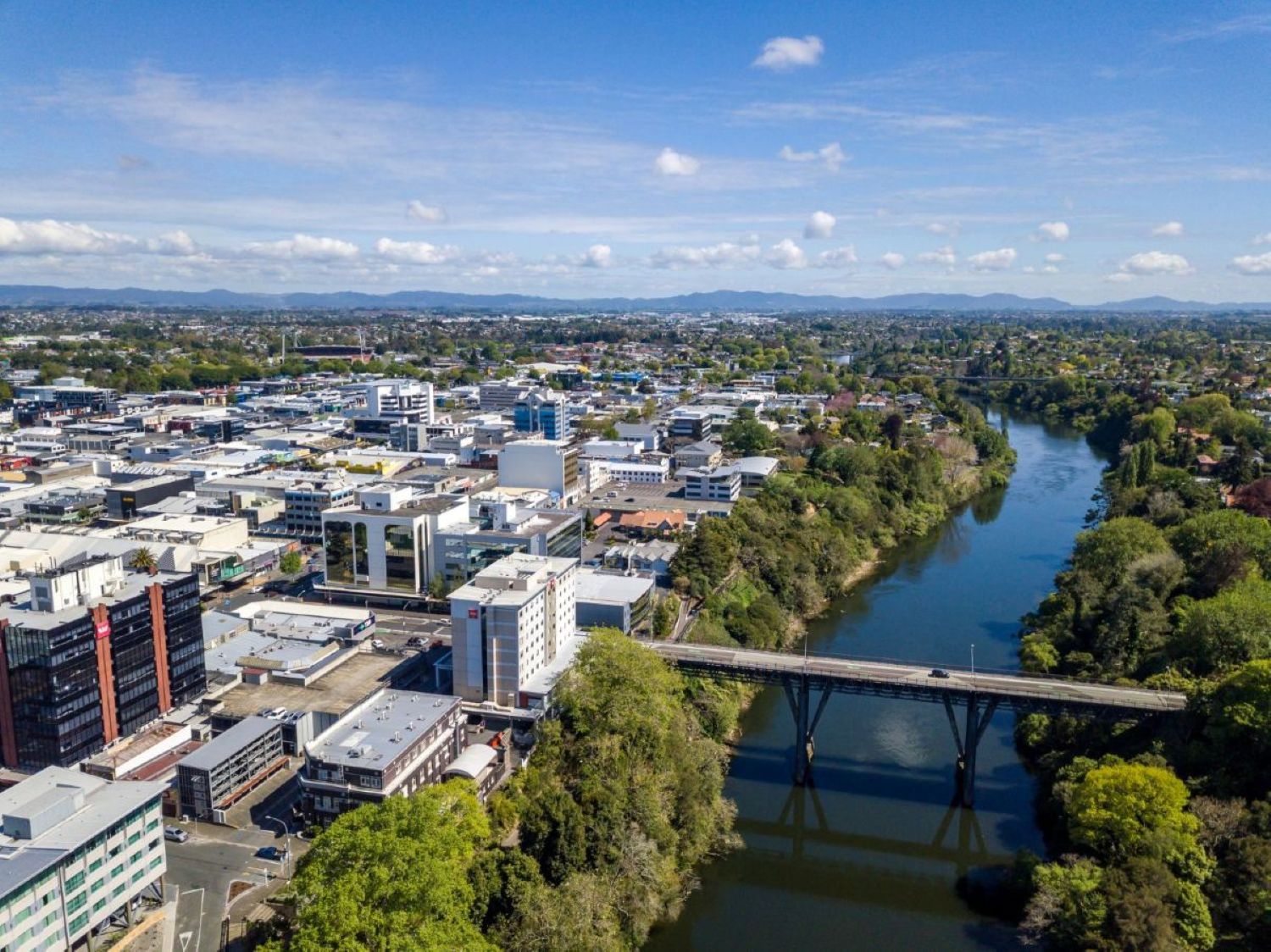
None of this means our CBD challenges no longer matter. A vibrant city centre still matters enormously. But the wheels are very much in motion to turn this around. The BNZ Theatre, Victoria St Tower, the continued expansion of Union Square, and the Pullman Hotel are just a few of the developments that spring to mind. We do need to remember to judge Hamilton’s economic health by the whole city, not just one precinct, and of course, that every economic cycle creates winners and losers.
Some remarkably astute Hamiltonians have continued investing through these difficult years, and now we have an enviable pipeline of investment, infrastructure, and population growth. And that’s the Hamilton economic story we should probably talk more about: counting the cranes and diggers, not just the empty shopfronts. Because the story of Hamilton’s economy isn’t only what happened on Victoria Street last year. It is also what is being built, carefully and quietly, all around us.